
Publications FATC 2026 · #129
Conference poster · FATC 2026 · #129
Comparative Analysis of Carbonatic Scaling on DLC-Coated and Bare Hastelloy
1 Industrial Technology Department, UFES · 2 Graduate Program in Mechanical Engineering, UFES · 3 Graduate Program in Energy, UFES · 4 Petrobras, Rio de Janeiro, Brazil · * fabio.a.pereira@ufes.br
Presented at the SPE Brazil Flow Assurance Technology Congress — FATC 2026 · Rio de Janeiro, November 4–6, 2026
Page link: www.brazflow.com/posters/fatc-129/
Analysis
About this work
Objective
To find out whether a diamond-like carbon (DLC) coating reduces CaCO3 scaling on Hastelloy C-276 — a corrosion-resistant alloy used in HPHT wells — as a passive alternative to chemical treatment. DLC films are hard, low-friction and stable up to 260 °C.
Approach
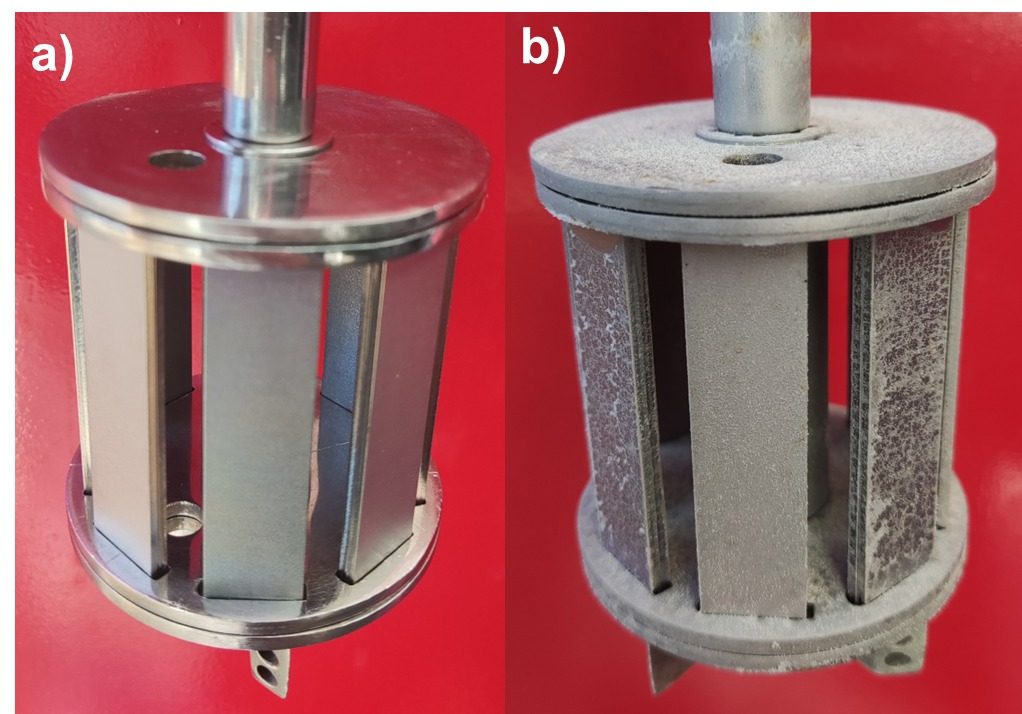
Bare and DLC-coated coupons were mounted side by side in the same rotating cage and tested together in our HPHT reactor (100 bar CO2, 90 °C, 125 rpm), so both surfaces saw exactly the same brine, flow and depressurization. Scale was quantified by gravimetry and examined by optical microscopy.
What we found
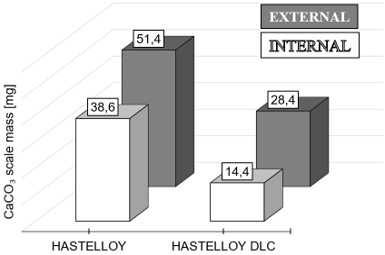
- DLC reduced the CaCO3 mass by 63% on internal coupons (38.6 → 14.4 mg) and by 45% on external coupons (51.4 → 28.4 mg).
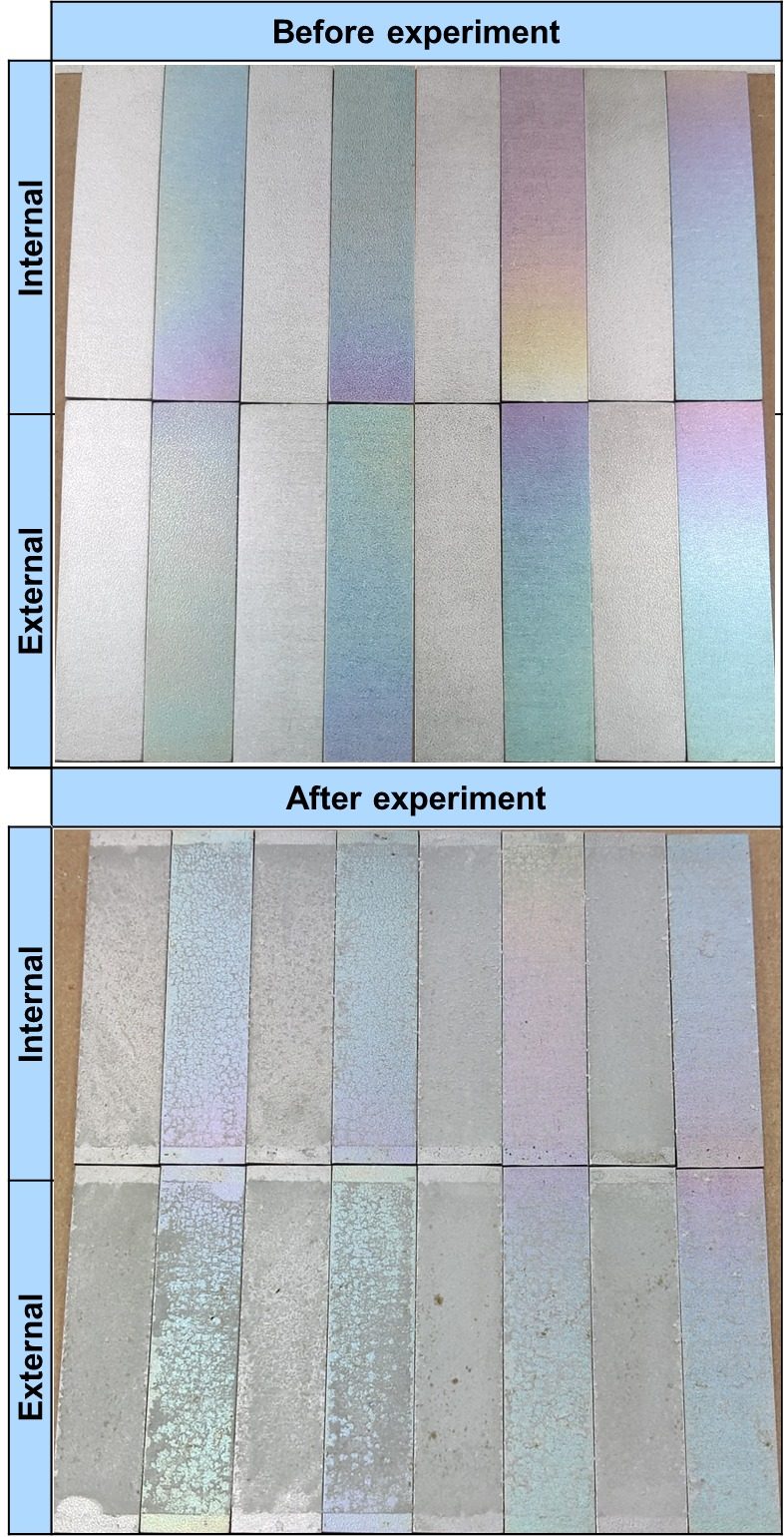
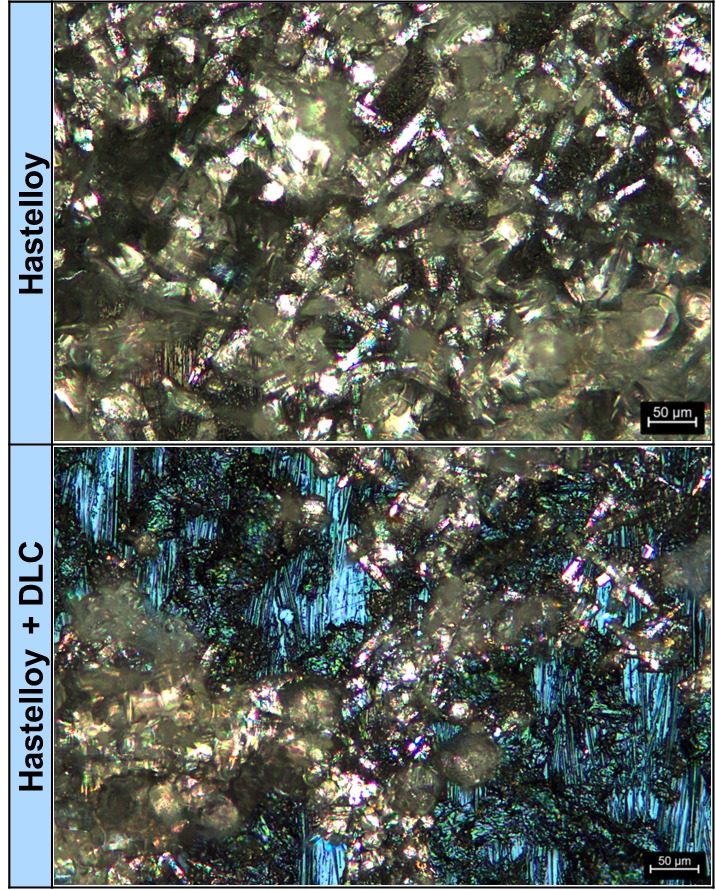
- Bare Hastelloy was covered by a uniform layer; on DLC the deposit was sparse and discontinuous.
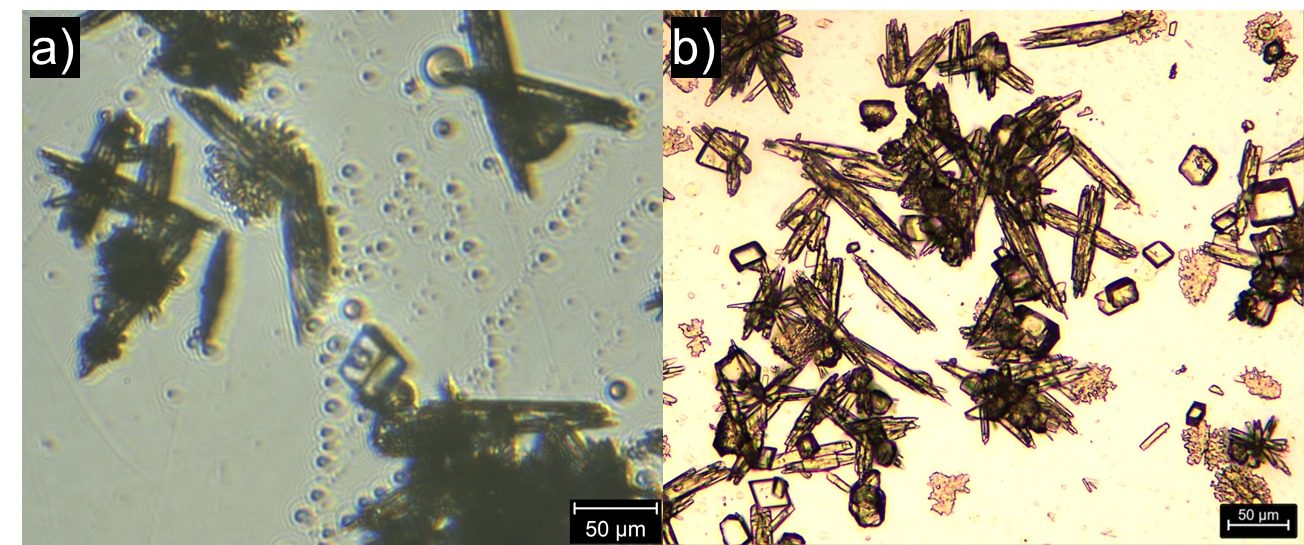
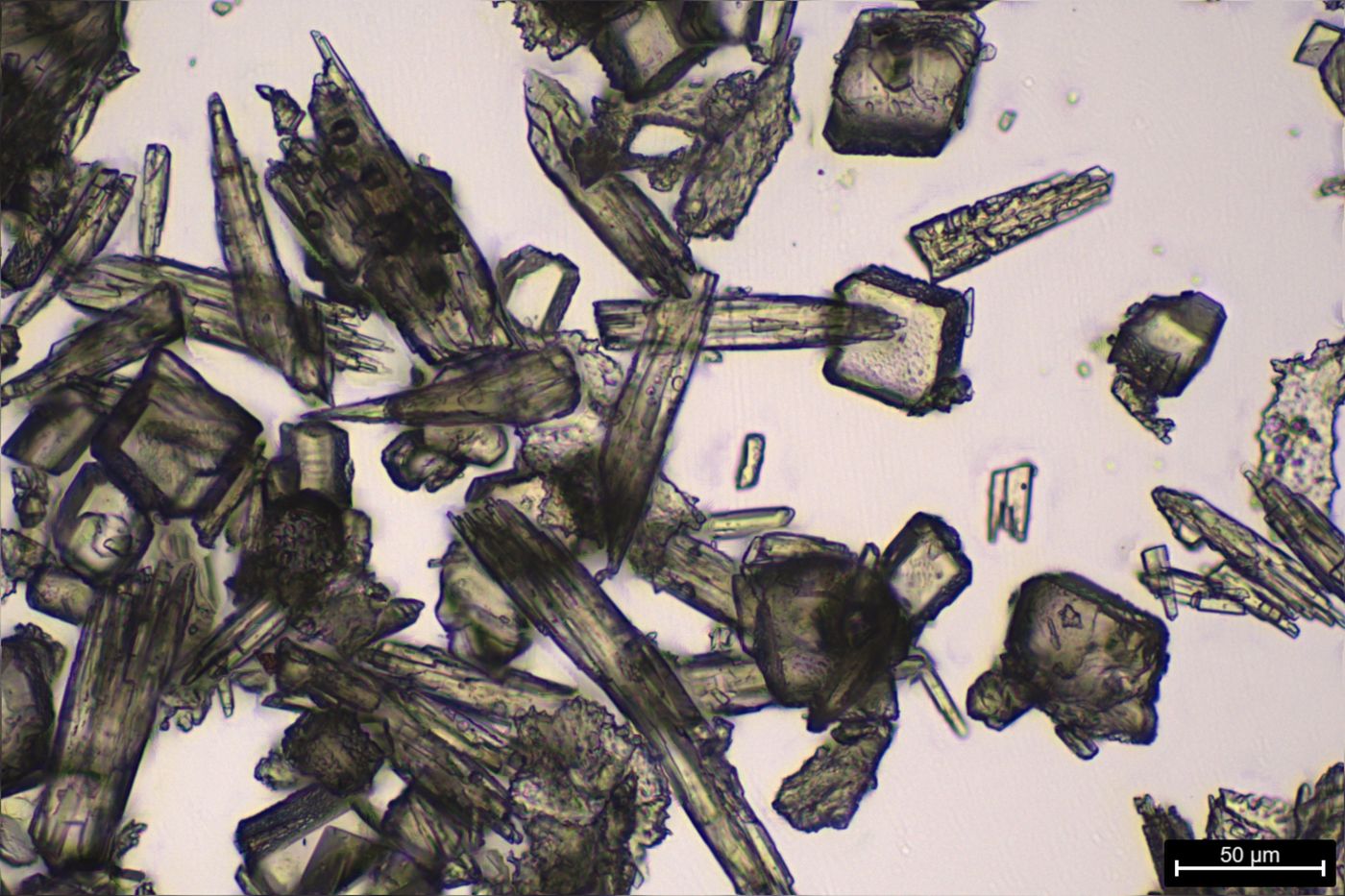
- Aragonite needles dominated, followed by calcite and flower-like vaterite. DLC hinders the calcite base layer that anchors aragonite, which results in a less adherent scale.
- External coupons scaled more than internal ones on both surfaces: flow conditions matter as much as the surface itself.
Why it matters
A coating that roughly halves the scale and weakens how it anchors to the wall is a promising passive mitigation for HPHT wells — especially where continuous chemical treatment is limited.
Experimental setup
Experimental conditions and tests performed
Tests performed
| Surface | Position | CaCO3 mass (mg) | DLC vs. bare |
|---|---|---|---|
| Bare Hastelloy | Internal | 38.6 | — |
| Hastelloy + DLC | Internal | 14.4 | −63% |
| Bare Hastelloy | External | 51.4 | — |
| Hastelloy + DLC | External | 28.4 | −45% |
One test with both surfaces in the same cage; CaCO3 mass from Figure 3.
Test conditions
- Reactor
- HPHT rotating-cage reactor
- Coupons
- Hastelloy C-276, bare and DLC-coated, internal and external positions — mounted alternately in the same cage
- Gas
- 100 bar of CO2
- Temperature
- 90 °C
- Rotation
- 125 rpm
- Brine
- High-salinity NaCl brine with Ca2+ and HCO3− (tables)
- Volumes
- Solution A 2,750 mL · Solution B 250 mL
- Trigger
- Depressurization → CO2 flashing → CaCO3 deposition
Solution composition
| Reagent | Sol. | Sol. (mg/L) | Mixture (mg/L) |
|---|---|---|---|
| NaHCO3 | A | 1,514 | 1,387 |
| NaCl | A | 140,906 | 129,164 |
| CaCl2·2H2O | B | 296,156 | 24,680 |
Final mixture — ions
| Ion | Mixture (mg/L) |
|---|---|
| Na+ | 51,190 |
| HCO3− | 1,008 |
| Cl− | 90,258 |
| Ca2+ | 6,728 |
Analyses
- Gravimetry — CaCO3 mass on bare and DLC-coated coupons
- Optical microscopy — coupon surfaces, reactor viewing window and solution collected from the reactor
- Polymorph identification by crystal habit — aragonite, calcite and vaterite
From the poster
Poster figures
Select a figure to open it at full size.
From the lab
More images from the tests
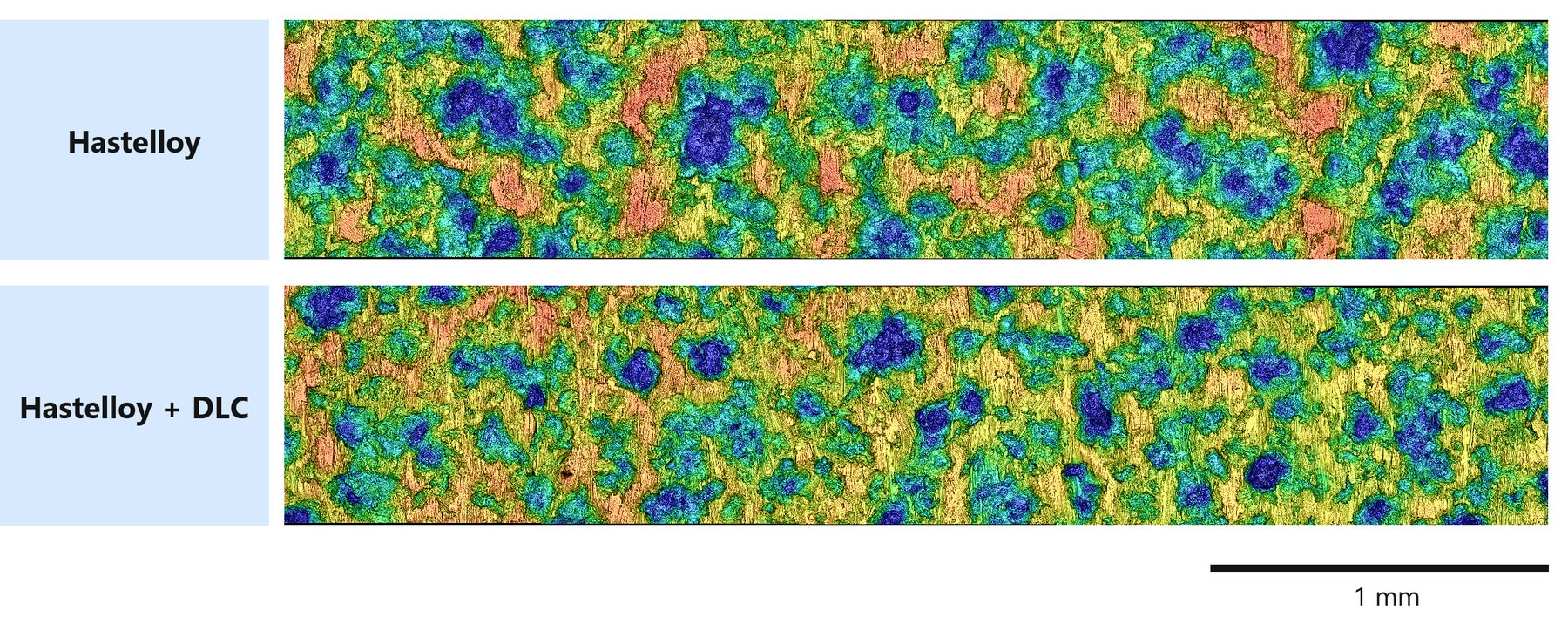
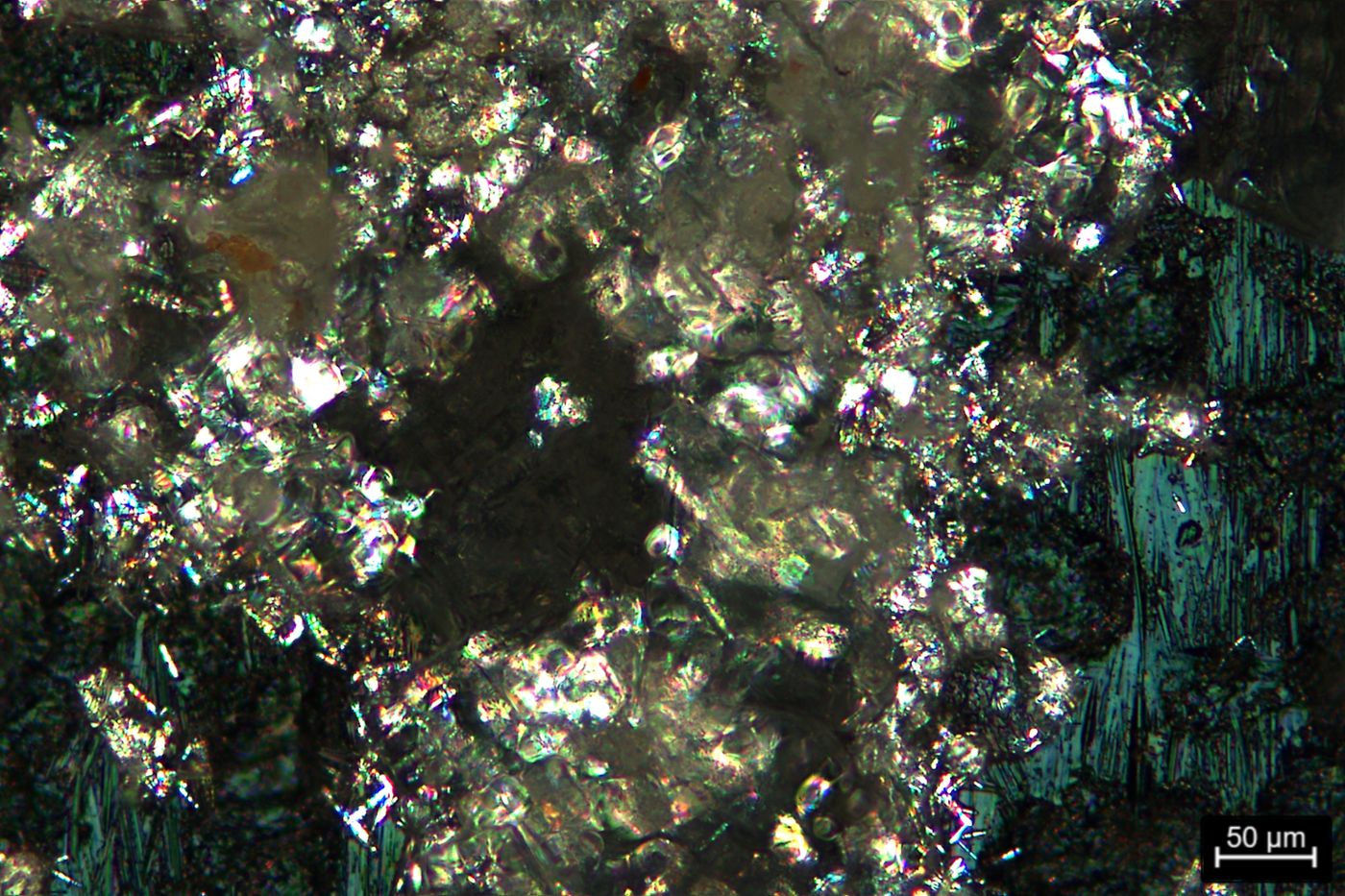
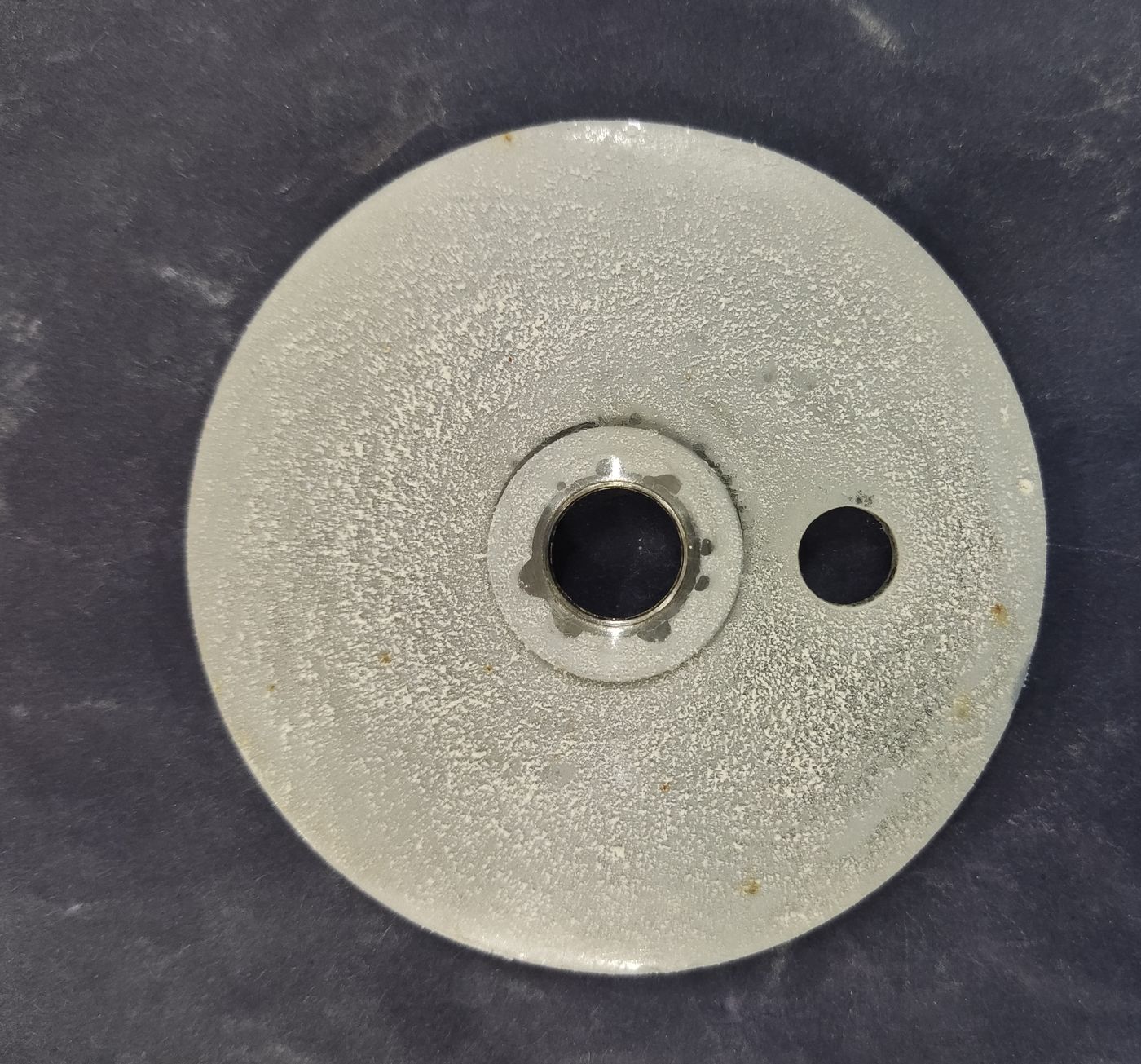
Images from the same test (test 27, August 2025: 90 °C, 100 bar CO2, 125 rpm) that are not shown in the poster — including 3D surface profilometry of the coupons.
References
- Kamal, M. S. et al., 2018. Oilfield scale formation and chemical removal: a review. J. Pet. Sci. Eng., 171, pp. 127–139.
- Cosmo, R. P. et al., 2022. Modeling and validation of the CO2 degassing effect on CaCO3 precipitation using oilfield data. Fuel, 310(B), 122067. doi:10.1016/j.fuel.2021.122067
- Zancanella, A. C. B. et al., 2025. Evaluation of the surface finish on 304 stainless steel as a way to mitigate CaCO3 scaling. Surfaces, 8(1), 13.
- Tallant, D. R. et al., 1995. The thermal stability of diamond-like carbon. Diamond Relat. Mater., 4(3), pp. 191–199.
Want to test your product or material?
Our HPHT reactor runs these tests under representative well conditions.